Social Commerce Market Size, Share, Trends and Analysis by Region, Product, Access, Platform and Segment Forecast to 2030
Powered by 
Access in-depth insight and stay ahead of the market

Accessing the in-depth insights from the ‘Social Commerce’ report can help:
- Understand the current and future state of the market, allowing businesses to make informed decisions about market entry, product development, and investments.
- Identify competitors’ capabilities to stay ahead in the market.
- Identify segments and get an understanding of various stakeholders across different stages of the entire value chain.
- Anticipate changes in demand and adjust the business development strategies.
- Identify potential regions and countries for growth opportunities.
How is our ‘Social Commerce’ report different from other reports in the market?
- The report presents in-depth market sizing and forecasts at a segment level for over 20 countries, including historical and forecast analysis for 2020-2030 for market assessment.
- The report offers detailed segmentation by:
- Product – Apparel, Food & Beverages, Home Products, Electronics & Accessories, Personal Care, Others
- Access – Mobile Devices, Desktops & Laptops
- Platform – Live Commerce, Group Buying, Super Apps, Others
- Region – North America, Europe, Asia-Pacific, South & Central America, and Middle East & Africa
- The report covers key market trends, drivers, and challenges impacting the social commerce market.
- The competitive landscape includes competitive positioning of key companies and their strengths and limitations in the market that will help the stakeholders in the ongoing process of identifying, researching, and evaluating competitors, to gain insight to form their business strategies.
- The report covers competitive profiling and benchmarking of key companies in the market to provide a deeper understanding of industry competition.
- The report can be a valuable tool for stakeholders to improve their operations, increase customer satisfaction, and maximize profitability by analyzing the latest social commerce trends, tracking market growth and demand, and evaluating the existing competition in the market.
We recommend this valuable source of information to:
- Social Media Companies
- Supply Chain and Logistic Firms
- Venture Capital Firms
- Ecommerce Companies
- Online Retailers
- Investment Advisors
- Consultancy Firms
- Management Consultants and Analysts
Get a Snapshot of the Social Commerce Market, Download a Free Report Sample
Social Commerce Market Report Overview
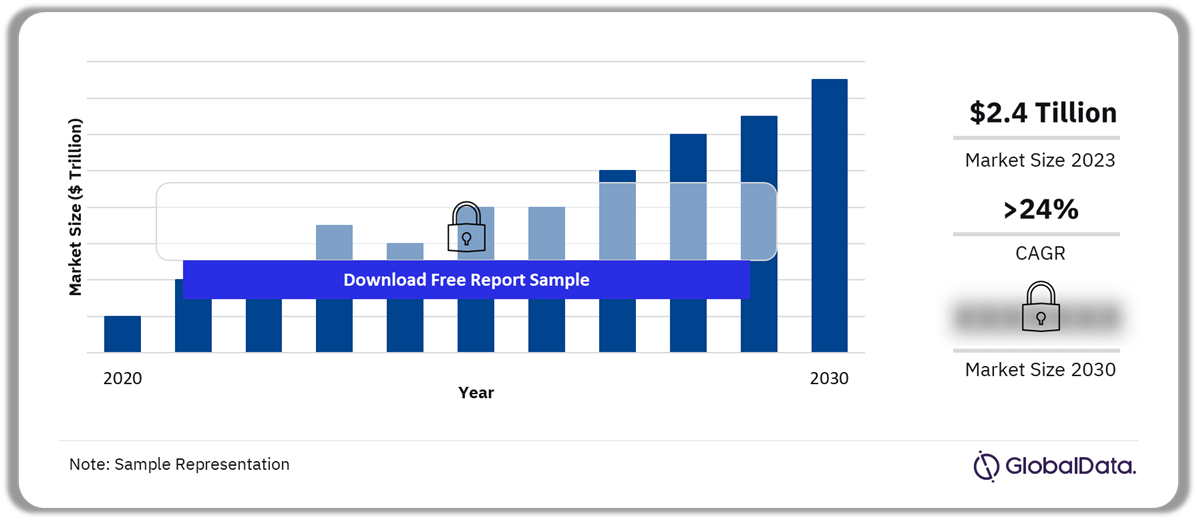
The social commerce market size was valued at $2.4 trillion in 2023 and is expected to grow at a compound annual growth rate (CAGR) of more than 24% over the forecast period. The widespread use of smartphones and increasing internet penetration have made it easier for people to connect to social media platforms at any time. This accessibility will fuel market growth, as users can browse products and make purchases directly from their social media feeds. Additionally, the integration of in-app payment features by social media platforms enables small merchants to sell their products within the app, eliminating the need for investment in their ecommerce site, and propelling market expansion.
Technologies such as the metaverse and augmented reality (AR) enable brands to craft engaging and interactive interfaces for users shopping on their platforms. Looking ahead, the metaverse and AR hold the promise of empowering brands to construct virtual environments where they can possess digital assets, establish storefronts, and sell products directly to customers. This advancement offers an immersive journey for customers, allowing them to virtually sample products before making a purchase. These capabilities are set to elevate the shopping experience, promoting growth for businesses and delighting customers.
Social Commerce Market Outlook, 2020-2030 ($Trillion)
Buy the Full Report for Additional Insights on the Social Commerce Market Forecast
Social media offers small businesses the opportunity to create engaging content to connect with their customers and grow the outreach of their brands. Small businesses and brands with niche product categories are shifting to social media to attract more customers from massive online populations. Additionally, social media posts by small businesses help create brand awareness by spreading product information rapidly in a cost-efficient manner, potentially reaching millions of users, and resulting in market expansion.
In the dynamic landscape of ecommerce, there has been an increase in the popularity of apps such as Alipay, WeChat, Grab, and others that provide more than one function such as shopping and instant messaging. Termed as super apps, they have experienced a significant uptick in user adoption, driven by their intuitive interface and wide range of transactional capabilities. The built-in messaging features within these apps enable communication and sharing of information, cultivating a sense of community among users. This increases engagement and enhances the overall user experience, thereby driving growth in the social commerce market.
User-generated content (UGC) serves as a driving force for the market by fostering trust among shoppers. Authentic images shared by real customers often hold more influence than staged product photos. Shoppable user-generated content, comprising images, videos, or reviews, enables shoppers to visualize products before making online purchases. Additionally, the integration of UGC, such as comments and shares, across social commerce platforms reinforces credibility and confidence among shoppers. This authentic endorsement encourages others to make purchases with assurance, contributing to the growth of the market.
| Market Size (2023) | $2.4 Trillion |
| CAGR (2023 – 2030) | >24% |
| Forecast Period | 2023-2030 |
| Historic Data | 2020-2022 |
| Report Scope & Coverage | Revenue Forecast, Competitive Index, Company Landscape, Growth Trends |
| Product | Apparel, Food & Beverages, Home Products, Electronics & Accessories, Personal Care, Others |
| Access | Mobile Devices, Desktops & Laptops |
| Platform | Live Commerce, Group Buying, Super Apps, Others |
| Geographies | North America, Europe, Asia-Pacific, South & Central America, Middle East & Africa |
| Countries | US, Canada, Mexico, UK, Germany, France, Netherlands, Italy, Spain, Belgium, China, India, Japan, South Korea, Australia, Singapore, Philippines, Malaysia, Indonesia, Thailand, Vietnam, Brazil, Argentina, Saudi Arabia, South Africa, UAE |
| Key Companies | Beijing ByteDance Technology Co. Ltd., Meta Platforms Inc., PDD Holdings Inc., Pinterest Inc., Poshmark Inc., Snap Inc., Tencent Holdings Ltd., Twitter Inc., Yunji Inc. |
| Enquire & Decide | Discover the perfect solution for your business needs. Enquire now and let us help you make an informed decision before making a purchase. |
Social Commerce Market Segmentation by Product
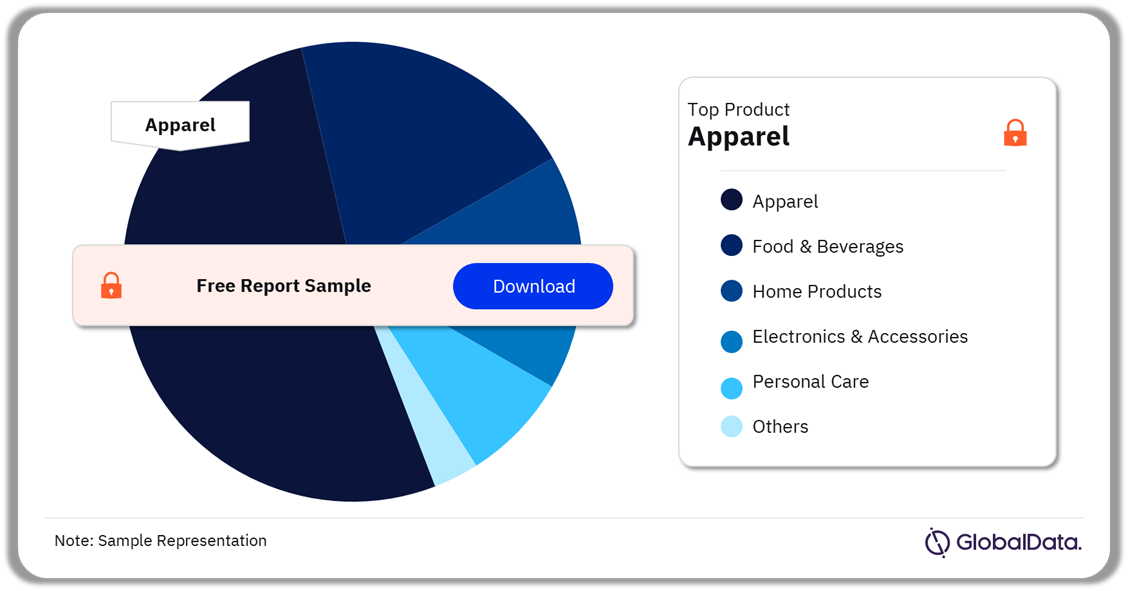
Apparel accounted for the largest revenue share in the product segment. Social media platforms possess expansive user bases, allowing apparel brands the opportunity to reach a broader audience and capture the interest of potential customers who might not actively search for clothing on conventional e-commerce platforms. Additionally, the utilization of user-generated content and influencer partnerships on networking platforms aids in establishing trust and authenticity surrounding the brand and its offerings. Consumers tend to place greater trust in recommendations from peers or influencers they follow on social media, enhancing the brand’s credibility.
Social media platforms offer an ideal environment for users to discover new electronic products through sponsored ads, influencer endorsements, and user-generated content. Brands leverage these platforms to provide exclusive discounts and promotions, driving sales and enhancing consumer interaction. Additionally, brands can target specific demographics and personalize product suggestions based on individual preferences, making electronic products more appealing and suitable to consumers.
Social Commerce Market Share by Product, 2023 (%)
Buy the Full Report for More Information on Social Commerce Market Products
Food and beverage items benefit from their appealing appearance on social media, attracting attention and generating interest. User-generated content, such as reviews and photos, adds credibility to these products, fostering trust and encouraging others to try them. Integrating ordering and delivery services into platforms simplifies purchasing, prompting impulse buys.
Social Commerce Market Segmentation by Access
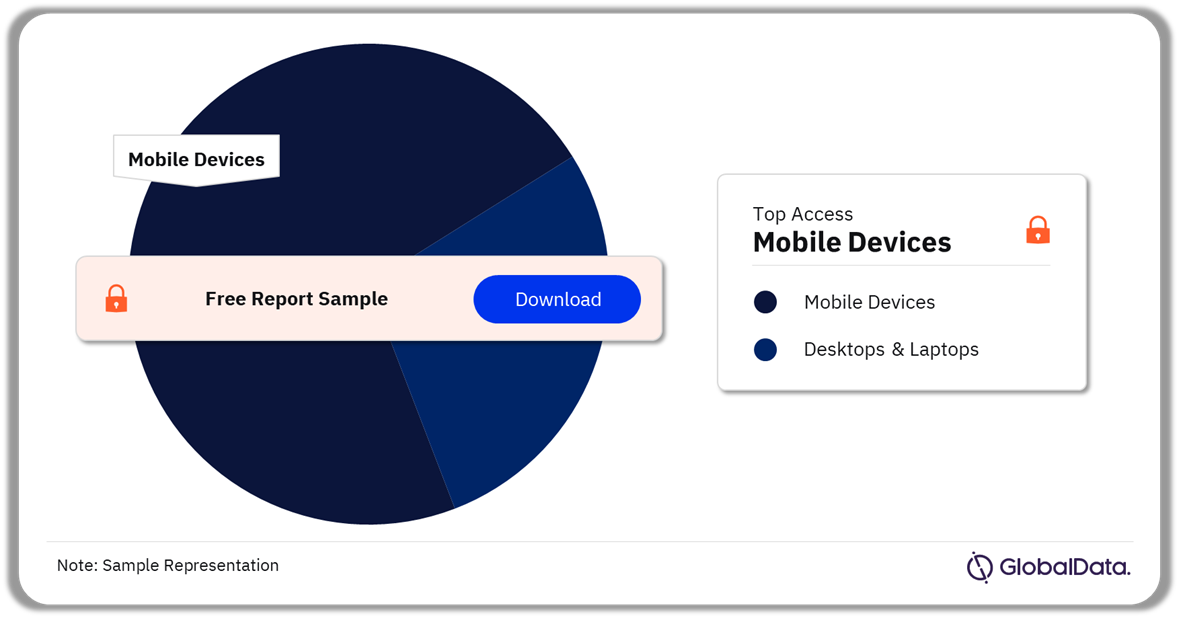
Mobile devices are leading in the market, propelling substantial growth and influencing consumer behavior. The widespread adoption of smartphones and tablets has broadened access to networking platforms, fueling participation in online shopping. The convenience and flexibility provided by mobile devices empower consumers to explore, find, and buy products directly from their gadgets, regardless of time or location. Consequently, mobile platforms have evolved into essential components of social commerce, driving heightened user involvement, improved conversion rates, and overall enriched shopping experiences.
Social Commerce Market Share by Access, 2023 (%)
Buy the Full Report for More Information on Social Commerce Market Access
While smartphones are popular, desktops/laptops are essential for social commerce due to their larger screens. This size advantage allows for more detailed product images, descriptions, and user reviews, creating a richer shopping experience. Desktops also enable interactive product visualization tools such as 360-degree views, enhancing product understanding. Additionally, they integrate with external software for efficient management and analysis of social commerce operations. These features of desktops/laptops are expected to drive the market in the segment.
Social Commerce Market Segmentation by Platform
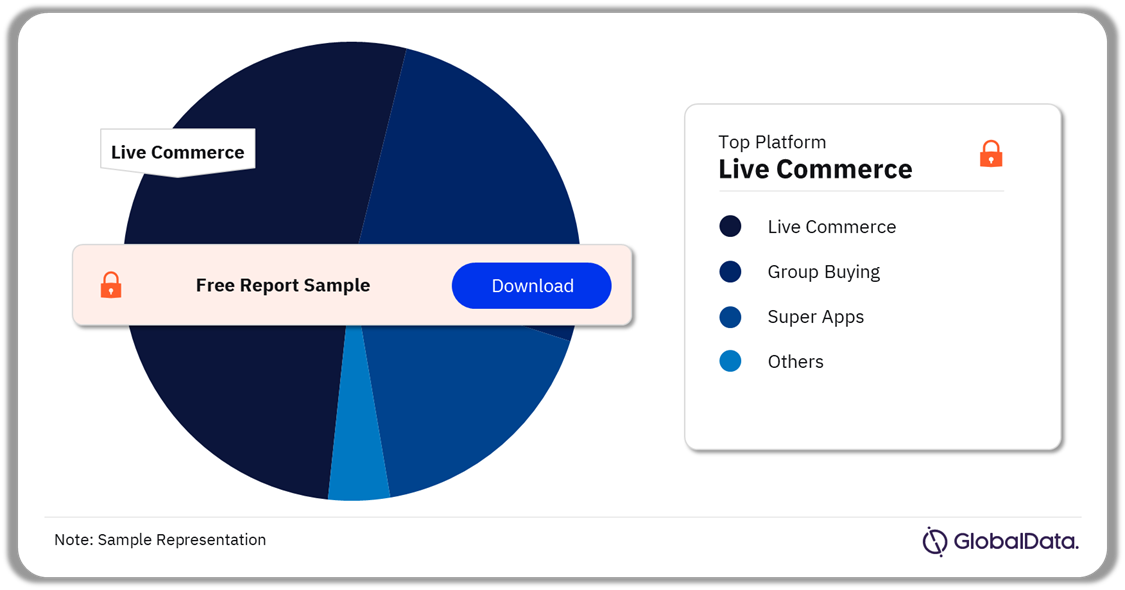
Live commerce emerged as the dominant platform segment in the market. It facilitates instant interaction between sellers and viewers, enabling live Q&A sessions, product demos, and feedback exchanges. Sellers showcase products in real time, offering viewers an immersive shopping experience. Live streaming often features special offers, discounts, and limited-time promotions to encourage purchases during broadcasts. Brands can partner with influencers to host live-streaming events, leveraging their reach to expand their audience and boost sales.
Super apps blend networking, messaging, e-commerce, and additional services, providing users with a holistic shopping experience. Within the app, users can browse and purchase products, simplifying the shopping journey. Moreover, super apps incorporate multiple payment options for secure transactions and offer customer support features such as chatbots or live chat for assistance with inquiries, order tracking, and troubleshooting.
Social Commerce Market Share by Platform, 2023 (%)
Buy the Full Report for More Information on Social Commerce Market Platforms
Group buying empowers users to utilize their combined purchasing influence on avail discounts or exclusive offers on products or services. Participants can extend invitations to friends, family, or colleagues, fostering social sharing and word-of-mouth promotions. Often, group buying presents unique deals, time-limited promotions, or bulk discounts exclusive to participants. Overall, it enriches social commerce by enabling users to save money, share enticing offers within their network, and engage in collective purchasing ventures, cultivating a community-driven and exhilarating shopping environment.
Social Commerce Market Segmentation by Region
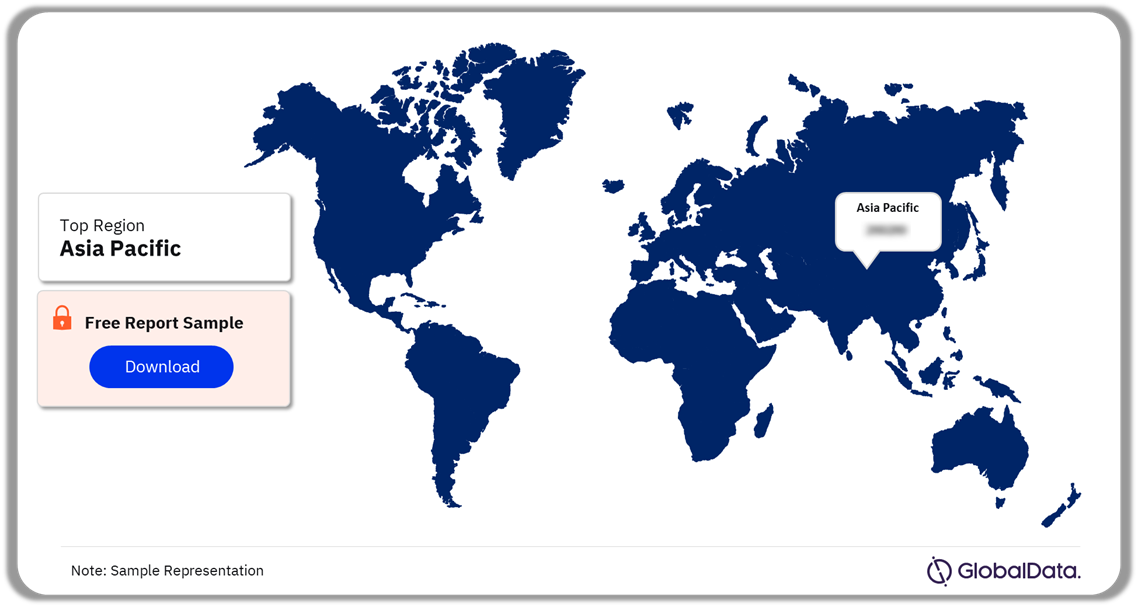
In 2023, Asia Pacific emerged as the top revenue generator in the market. The region’s vibrant growth prospects are fueled by increased digitalization, a youthful demographic, and rising incomes. According to the mobile economy Asia Pacific 2023 report by GSMA, in 2022, the region had the highest percentage of young internet users globally, with over 1 billion smartphone users among its population. Southeast Asia drives substantial regional demand due to its renowned robust telecom infrastructure. India, witnessing rapid emergence, is a focal point for technology companies entering the social commerce landscape across the region.
The market is gaining momentum in Europe as consumers increasingly turn to platforms such as Facebook, Instagram, and TikTok for shopping. This trend is supported by the growing e-commerce penetration in the region. Major platforms are investing in enhancing their social commerce capabilities, with examples like TikTok’s beta run of TikTok Shop in select European countries. Faster checkout processes, exclusive products, and increased brand advertising on social media are driving the adoption of online shopping, particularly among younger consumers.
Social Commerce Market Share by Region, 2023 (%)
Buy the Full Report for Regional Insights into the Social Commerce Market
High internet and smartphone penetration rates in North America make accessing social media platforms for online shopping effortless. Led by major companies such as Amazon and Walmart, the region’s strong e-commerce infrastructure simplifies the integration of social commerce features, driving adoption. North America’s tech-savvy consumers have embraced online shopping, speeding up the acceptance of social commerce. Innovative payment solutions such as digital wallets and buy now, pay later (BNPL) options are streamlining the purchasing process, making social shopping even more convenient in the region.
Social Commerce Market – Competitive Landscape
The market globally is dominated by a handful of established companies that control a significant share. The market is poised to see the entry of numerous technology startups offering diverse features on social media platforms. Additionally, social media companies are likely to encounter competition from e-commerce firms seeking to integrate social features into their existing interfaces. For instance, in May 2024, eBay introduced an interactive livestream shopping event in the UK. This approach is expected to be emulated by other e-commerce companies, intensifying competition within the market.
Key industry leaders such as Meta Platforms Inc., Beijing ByteDance Technology Ltd., and Pinterest Inc. are strategically forming partnerships and acquiring smaller companies to harness their technologies and enhance their products. For example, in January 2024, TikTok (owned by Beijing ByteDance Technology Ltd.) acquired the Indonesian e-commerce company Tokopedia. This acquisition consolidated Tokopedia and TikTok Shop Indonesia’s operations under the Tokopedia entity. By April 2024, Tokopedia had amassed over 21 million registered sellers.
Leading Companies in the Social Commerce Market
- Beijing ByteDance Technology Co. Ltd.
- Meta Platforms Inc.
- PDD Holdings Inc.
- Pinterest Inc.
- Poshmark Inc.
- Snap Inc.
- Tencent Holdings Ltd.
- Twitter Inc.
- Yunji Inc.
Buy the Full Report to Know More About Leading Social Commerce Companies
Social Commerce Market Segments
GlobalData Plc has segmented the social commerce market report by product, access, platform, and region:
Social Commerce Product Outlook (Revenue, $Billion 2020-2030)
- Apparel
- Food & Beverages
- Home Products
- Electronics & Accessories
- Personal care
- Others
Social Commerce Access Outlook (Revenue, $Billion 2020-2030)
- Mobile Devices
- Desktops & Laptops
Social Commerce Platform Outlook (Revenue, $Billion 2020-2030)
- Live Commerce
- Group Buying
- Super Apps
- Others
Social Commerce Regional Outlook (Revenue, $Billion 2020-2030)
- North America
- US
- Canada
- Mexico
- Europe
- UK
- Germany
- France
- Netherlands
- Italy
- Spain
- Belgium
- Rest of Europe
- Asia-Pacific
- China
- India
- Japan
- South Korea
- Australia
- Singapore
- Philippines
- Malaysia
- Indonesia
- Thailand
- Vietnam
- Rest of Asia Pacific
- South & Central America
- Brazil
- Argentina
- Rest of South & Central America
- Middle East & Africa
- Saudi Arabia
- South Africa
- UAE
- Rest of the Middle East & Africa
Scope
- This report provides overview and service addressable market for social commerce market.
- It identifies the key trends impacting growth of the market over the next 12 to 24 months.
- It includes global market forecasts for the social commerce industry and detailed competitor analysis.
Key Highlights
The global social commerce market will be valued at $ 2,398.4 billion in 2023 and is expected to grow at a compound annual growth rate (CAGR) of 24.4% over the forecast period. The rising disposable income, improved network connectivity, and proliferation of mobile devices are some of the prime factors responsible for the growth of this market.
Reasons to Buy
This market intelligence report offers a thorough, forward-looking analysis of the global social commerce market by type and key opportunities in a concise format to help executives build proactive and profitable growth strategies.
Accompanying GlobalData’s Forecast products, the report examines the assumptions, drivers, deals, strategic initiatives and trend analysis in social commerce markets.
Detailed segmentation by product – Apparel, Food & Beverages, Home Products, Electronics & Accessories, Personal Care, Others
The report also highlights key access segments Mobile Devices, Desktops & Laptops
Detailed segmentation by platform segments Live Commerce, Group Buying, Super Apps, Others
The report includes 50+ charts and tables providing in-depth analysis of the market size, forecast and supporting factors which are tailor-made for an executive-level audience, with enhanced presentation quality.
The report provides an easily digestible market assessment for decision-makers built around in-depth information gathered from local market players, which enables executives to quickly get up to speed with the current and emerging trends in social commerce markets.
The competitive section of the report helps in identifying the flagbearers, experimenters, contenders, and specialists based on their growth and innovation performance in the online retail industry which will help stakeholders analyze competition penetration.
The broad perspective of the report coupled with comprehensive, actionable detail will help mining sector stakeholders, service providers, and other social commerce players succeed in growing the social commerce market globally.
Key Players
Beijing ByteDance Technology Co LtdGoogle LLC (YouTube)
Meta Platforms Inc
PDD Holdings Inc
Pinterest Inc
Poshmark Inc
Snap Inc
Tencent Holdings Ltd
Twitter Inc
Yunji Inc
Table of Contents
Figures
Frequently asked questions
-
What was the social commerce market size in 2023?
The social commerce market size was valued at $2.4 trillion in 2023.
-
What is the social commerce market growth rate?
The social commerce market is expected to grow at a CAGR of more than 24% during the forecast period.
-
What are the key social commerce market drivers?
The high penetration of mobile devices, ease of access to social media, improved network connectivity, rising disposable income, and integration of in-app payment features by social media platforms are the factors contributing to the market growth.
-
Which was the leading regional market in the social commerce market in 2023?
Asia-Pacific led the regional market accounting for the highest share in the social commerce market in 2023.
-
Which was the leading product segment in the social commerce market in 2023?
Apparel led the product segment in the social commerce market in 2023.
-
Which was the leading access segment in the social commerce market in 2023?
Mobile devices led the access segment in the social commerce market in 2023.
-
Which was the leading platform segment in the social commerce market in 2023?
Live commerce led the platform segment in the social commerce market in 2023.
-
Which are the leading social commerce companies globally?
The leading social commerce companies are Beijing ByteDance Technology Co Ltd., Meta Platforms Inc., PDD Holdings Inc., Pinterest Inc., Poshmark Inc., Snap Inc., Tencent Holdings Ltd., Twitter Inc., and Yunji Inc.
-
Is there a third level of segmentation in the report?
GlobalData’s focus is on providing reliable and accurate data that is supported by robust research methodology. Our reports undergo rigorous quality checks and are based on primary and secondary research sources, ensuring that the numbers and insights provided are trustworthy. However, despite the best efforts to gather comprehensive data, there could be instances where the available data is limited, making it challenging to provide third-level segmentation. In such cases, GlobalData may choose to provide high-level insights and general trends rather than forcing segmentation that may not be backed by sufficient data. This approach ensures that the report’s overall quality and credibility are maintained.
Get in touch to find out about multi-purchase discounts
reportstore@globaldata.com
Tel +44 20 7947 2745
Sample Report
We are confident about Social Commerce Market Size, Share, Trends and Analysis by Region, Product, Access, Platform and Segment Forecast to 2030 report's unique quality. However, we want you to make the most beneficial decision for your business, so we offer free sample pages to help you:
- Assess the relevance of the report
- Evaluate the quality of the report
- Justify the cost
Download your copy of the sample report and make an informed decision about whether the full report will provide you with the insights and information you need.


Related reports
View more Financial Services reports