Telemedicine – Physician Perspective – Thematic Intelligence
Powered by 
All the vital news, analysis, and commentary curated by our industry experts.

Reasons to buy the ‘Telemedicine – Physician Perspective’ thematic intelligence report:
- The report provides an overview of how virtual care and telemedicine have revolutionized the healthcare industry.
- The report reviews various segments within the virtual care and telemedicine value chain (patient seeking healthcare services, healthcare services, and electronic medical records) for market players to invest, explore, or ignore.
- It offers virtual care and telemedicine timelines and use cases for a better understanding of the theme.
How is our ‘Telemedicine – Physician Perspective’ report unique from other reports in the market?
- Develop and design your corporate strategies through an in-house expert analysis of virtual care and telemedicine by understanding the primary ways in which this theme is impacting the healthcare industry.
- Identify emerging industry trends to gain a competitive advantage.
We recommend this valuable source of information to anyone involved in:
- Healthcare Practitioners (HCPs), Doctors/Physician, Healthcare Service Providers
- Healthcare Organizations (HTA Bodies, Reimbursement Groups and Payers, Government Healthcare Organizations)
- Telehealth Service Providers/Value Chain – Startups & Leaders
- Consulting and Professional Services (e.g., Investment Companies, Investment Banks, Equity Companies, etc.)
- Pharma Manufacturers/Distributors (Innovative, Biotech, Generics, Biosimilars, Rare/Orphan Disease)
- Financial Institutions (Investors in Pharma/Biotech, Pricing Consultancies)/Parallel Trade Organizations
To Get a Snapshot of the Telemedicine – Physician Perspective Thematic Report
Telemedicine -Physician Perspective Thematic Report Overview
The adoption of telemedicine was on the rise even before the COVID-19 pandemic, but its uptake was relatively low owing to several limitations including regulatory restrictions and limited accessibility. However, social distancing and stringent lockdown measures during the pandemic bolstered the deployment of telemedicine to reduce disease transmission risks. With policymakers easing regulations, physicians confirmed a surge in telemedicine uptake, particularly, among consumers in the US and the UK.
After experiencing an unprecedented rise during the first few months of the pandemic, the use of telemedicine has stabilized. Continued technological progress, growing acceptance among patients, healthcare providers, and physicians, as well as the introduction of more uniform regulatory and reimbursement policies, will drive telemedicine adoption in the future.
GlobalData’s ‘Telemedicine-Physician Perspective’ thematic intelligence report assesses the telemedicine uptake in the 8MM (US, France, Germany, Italy, Spain, UK, Japan, and China) and examines the healthcare professionals’ (HCPs) perspective on its further integration into conventional healthcare practices. This thematic study also provides an in-depth outlook on the evolution of telemedicine adoption pre- and post-COVID-19 pandemic.
| Key Telehealth Types | · Live Video
· Store-and-Forward · RPM · mHealth |
| Enquire & Decide |
Discover the perfect solution for your business needs. Enquire now and let us help you make an informed decision before making a purchase. |
Telemedicine – Overview
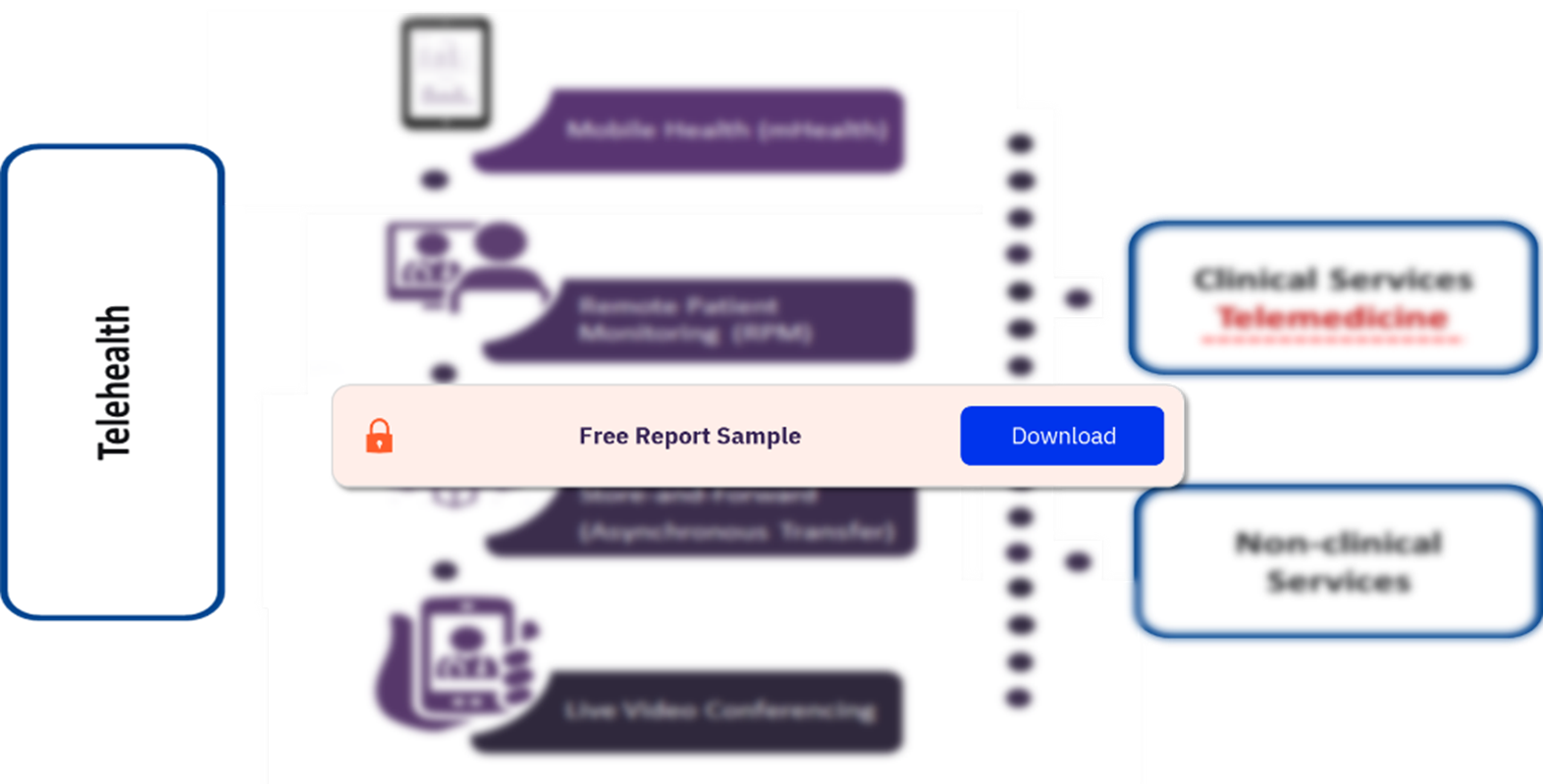
Telemedicine is a subset of telehealth that refers specifically to clinical healthcare services. Telemedicine is the use of real-time electronic communication, such as video conferencing or telephone, for the delivery of remote clinical care via virtual consultations. It can encompass patient-provider interactions in both inpatient and outpatient settings, as well as interactions between healthcare providers. While telehealth is often discussed interchangeably with telemedicine, telehealth is a broader term that encompasses the delivery of both clinical and non-clinical services. Telemedicine can therefore be viewed as a subset of telehealth that focuses on the provision of clinical services remotely.
According to the Center for Connected Health Policy (CCHP), telehealth can be divided into four broad categories including live video, store-and-forward, remote patient monitoring (RPM), and mHealth. The key benefits of telemedicine include increased self-management for patients, management of work-life balance for healthcare professionals, and cost savings for healthcare systems.
Key Telehealth Categories
 Buy the Full Report for More Insights on the Telemedicine Overview,
Download a Free Sample Report
Telemedicine Sector in the US, Europe, China, and Japan
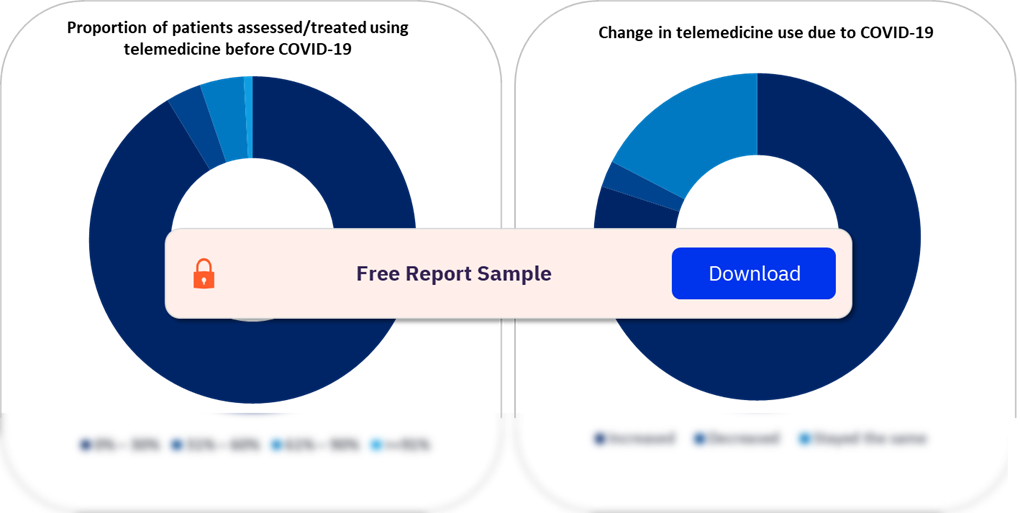
Before and during COVID-19: The COVID-19 pandemic significantly advanced the acceptance and integration of telemedicine in the healthcare systems, highlighting its ability to deliver accessible and efficient care. This is evident in the responses to the survey respondents, with nearly 80% of US-based physicians indicating an increase in utilization. Consequently, regulations and policies governing reimbursement and use of telemedicine have changed significantly, leading to expanded access and an unprecedented demand for these services in other countries including France, Germany, Italy, Spain, China, and Japan.
After COVID-19: The majority of healthcare practitioners (HCPs) and physicians in the US and Europe region reported an increase in telemedicine use after the pandemic and anticipated continued expansion in the future. For instance, Japan was the only researched market that did not report a decrease in telemedicine use after COVID-19. This suggests that telemedicine has become more integral to healthcare delivery in Japan, likely driven by the need for remote care during the pandemic.
Telemedicine Sector Before and After COVID-19 in the US
 Buy the Full Report for More Insights on Pre-and-Post-Pandemic Telemedicine Adoption in Key Countries, Download a Free Sample Report
Telemedicine - Acceptance Among Physicians and Patients
Physicians may have concerns about patients’ comfort whilst using technologies, perceived patients’ preference for in-person meetings, liability issues, or data privacy and security concerns. The concerns may also be associated with a forced switch in patients’ behaviors as during the pandemic patients did not have many options aside from using telemedicine. In 2024, HCPs from France, Italy, Germany, China, and Japan believed fewer patients feel comfortable with using telemedicine. In contrast, HCPs based in the UK and US were convinced that much bigger proportions of their patients were comfortable with telemedicine to interact with clinicians. Patients’ comfort with telemedicine matters as it impacts healthcare satisfaction. Furthermore, most HCPs advocating for telemedicine’s benefits rather than disagreeing with them may suggest that telemedicine use will successfully expand in the upcoming years.
Similarly, physicians view telemedicine as a beneficial asset for their practices offering enhanced accessibility, convenience, and quality of care.
Buy the Full Report for More Insights on the Acceptance of Telemedicine Among Physicians and Patients, Download a Free Sample Report
Key Highlights
- Telemedicine adoption was on the rise before COVID-19, but its uptake was still relatively low.
- Use of telemedicine surged during COVID-19 as a result of social distancing and lockdown measures.
- Post-COVID-19, the uptake of telemedicine slowed, but its peak is still yet to be reached.
- The main barriers to wider use of telemedicine are lack of awareness and a preference for in-person care.
- Telemedicine’s value in patient care is recognized by the healthcare professionals.
- Physicians have reservations regarding their patients’ comfort with using telemedicine.
- Telemedicine treats more patients with fewer clinicians.
- When feasible, the use of telemedicine should be a choice, rather than a compulsory requirement.
CareCloud Inc
Teladoc Health Inc
Skype Limited
Best Doctors Inc
Philips
drchrono Inc
Updox LLC
HealthTap Inc
DrFirst Inc
American Well Corp
MDLIVE Inc
Livongo Health Inc
Chiron Health, Inc.
New York Stock Exchange LLC
VSee Lab Inc
eVisit Inc
InTouch Health
PlushCare Inc
Doctor On Demand Inc
Cisco
Medici
Doxy Me LLC
BetterHelp
Goodrx Inc
Lemonaide
Table of Contents
Frequently asked questions
-
What are the key telehealth categories?
According to the Center for Connected Health Policy (CCHP), telehealth can be divided into four broad categories including live video, store-and-forward, remote patient monitoring (RPM), and mHealth.
-
What are the key benefits of telemedicine?
The key benefits of telemedicine include increased self-management for patients, management of work-life balance for healthcare professionals, and cost savings for healthcare systems.
-
Which are the key countries deploying telemedicine in the healthcare sector?
The US, the UK, China, Japan, France, Germany, and Spain are the key countries deploying telemedicine in the healthcare sector.

Get in touch to find out about multi-purchase discounts
reportstore@globaldata.com
Tel +44 20 7947 2745
Sample Report
Telemedicine – Physician Perspective – Thematic Intelligence was curated by the best experts in the industry and we are confident about its unique quality. However, we want you to make the most beneficial decision for your business, so we offer free sample pages to help you:
- Assess the relevance of the report
- Evaluate the quality of the report
- Justify the cost
Download your copy of the sample report and make an informed decision about whether the full report will provide you with the insights and information you need.


Related reports
View more Technology reports