

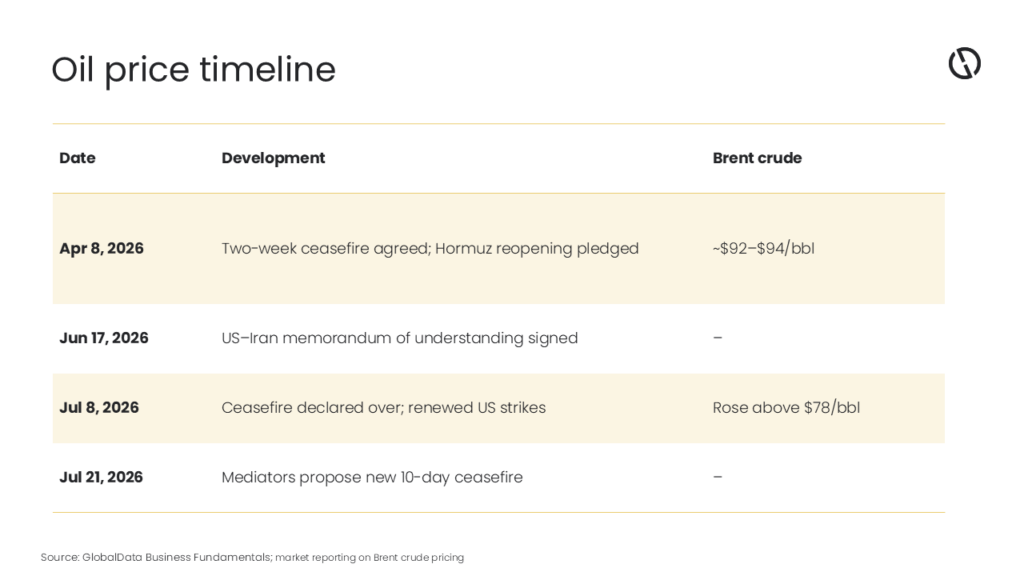
The ceasefire agreed between the US and Iran in June 2026 came under renewed strain in July. US President Donald Trump described the ceasefire as over on July 8, following attacks on commercial vessels in the Strait of Hormuz, and the US military carried out further strikes against Iran. Amid the escalation in the renewed US-Iran conflict, markets now treat the frozen-asset negotiations and the Houthis’ threat to Saudi shipping as the most sensitive variables for Brent’s near-term direction, according to GlobalData, a leading intelligence and productivity platform.
GlobalData’s analysis, published on June 23, 2026, had identified the frozen-asset dispute and the status of Lebanon as two of the more sensitive elements of the agreement. Both issues have featured in the recent breakdown.
Ramnivas Mundada, Director of Economic Research and Companies at GlobalData, comments: “The frozen-asset dispute and the status of Lebanon remain the two most sensitive elements of the agreement. Both have resurfaced in recent weeks, and either could move oil prices quickly in either direction.”
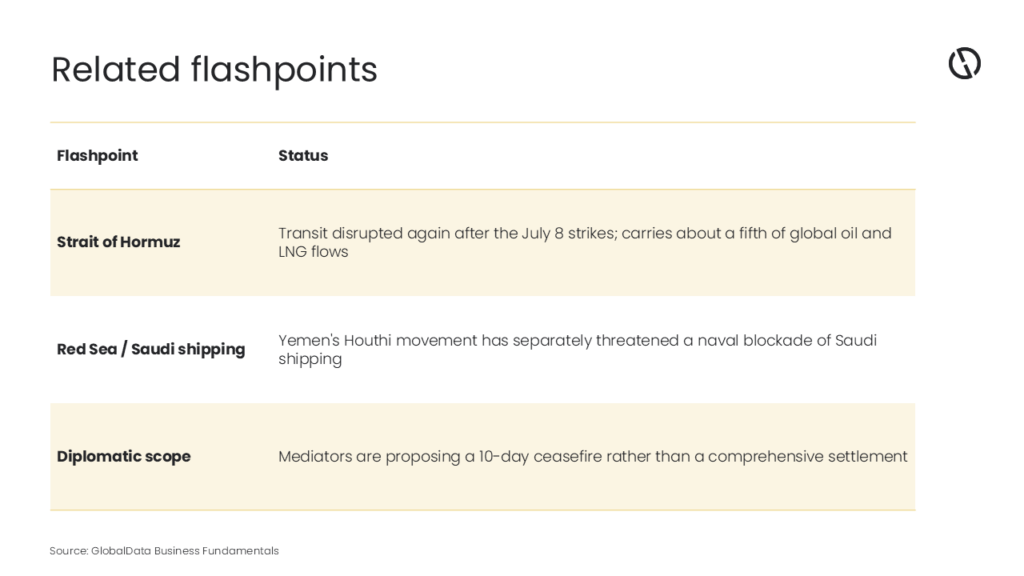
Each ceasefire since April has held for a shorter period than the one before it. The two-week truce agreed in April held only for days before renewed strikes. The June 17 memorandum, intended as a more lasting arrangement, held for around three weeks before the July 8 breakdown.
Mediators, reportedly including Pakistan, proposed a new ceasefire in an effort to bring the agreement back on track. The proposal now under discussion is limited to 10 days.
Mundada concludes: “The past four months show a pattern of short truces rather than a lasting settlement. The current 10-day proposal fits that pattern.”
