How the low-carbon hydrogen mix will scale to 2030
Blue hydrogen built on existing infrastructure leads current capacity, but GlobalData expects green to account for most of the market by 2030.
Global low-carbon hydrogen production stood at 2.3 million tonnes per annum (mtpa) at the end of 2025 and is set to more than double to 5.7mtpa by the end of 2026, according to GlobalData's recent analysis. Much of this capacity is comprised of blue hydrogen, but its green alternative is set to soon take over.
In 2025, blue hydrogen accounted for more than half (1.7mtpa) of total low-carbon hydrogen capacity, supported by lower costs and established infrastructure. However, GlobalData describes blue hydrogen as a near-term bridge before green dominates. Developers have lined up 65mtpa of green hydrogen capacity by 2030, compared to 11.8mtpa for blue hydrogen.
Green hydrogen is estimated to reach 64,959 kilotonnes per annum (ktpa) by 2030
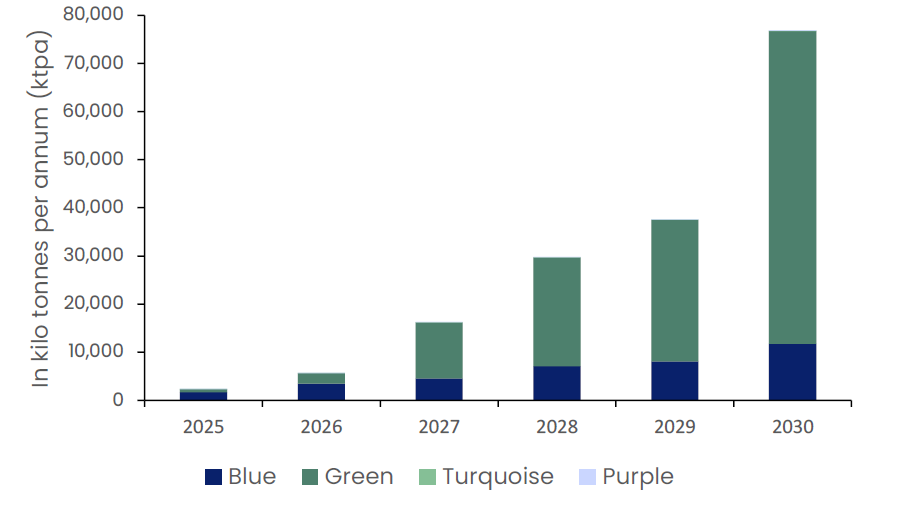
The transition from blue to green hydrogen reflects a shift in production technology. In 2025, steam methane reforming (SMR) supplied 63% of global low-carbon hydrogen. By 2030, GlobalData expects electrolysis to provide 85%, with gas-based methods shrinking to 13%, split between SMR and autothermal reforming.
The development of the low-carbon hydrogen pipeline will depend on policy, costs and demand, all of which are expected to vary across different regions.
Blue hydrogen remains the winner in North America
North America currently stands as the largest low-carbon hydrogen producer, with around 1.5mtpa of active capacity as of 2025, 92% of which is blue hydrogen. The region’s hydrogen market has been supported by abundant natural gas reserves, strong industrial demand and established carbon capture infrastructure.
In the US, capacity is concentrated along the Gulf Coast, holding more than 90% of the country’s hydrogen pipeline. Gulf Coast hydrogen production has been anchored in strong demand from petroleum refining in Texas and Louisiana, which have the largest refining capacities among all US states. Hydrogen producers in the region have also retrofitted carbon capture onto existing ammonia and hydrogen plants, as demonstrated by CF Industries at its Donaldsonville ammonia complex in Louisiana in July 2025.
The US hydrogen pipeline is evolving, however, with green hydrogen projected to make up 43% of 2030 capacity. Texas is set to lead the way, hosting several major green hydrogen projects such as GHI's Hydrogen City.
Green hydrogen’s most significant hurdle has been—and remains to be—production costs. But policy support is looking to close that gap, with the 45V Clean Hydrogen Production tax credit and the $7bn granted for the development of the Regional Clean Hydrogen Hubs Program, prompting a surge in green hydrogen project announcements.
However, this support was unstable. The eligibility rules took more than two years to be finalised after the 45V credit's introduction. The One Big Beautiful Bill Act (OBBBA) further limited the credit’s effectiveness as well as threatened the economics of renewable energy, putting capital-intensive, slow-to-permit green hydrogen projects at risk. In 2025, the US Department of Energy also cut federal funding for California's ARCHES hydrogen hub and the Pacific Northwest Hydrogen Hub, two of the regional hubs that more heavily featured green hydrogen compared to others.
GlobalData energy transition analyst Clarice Brambilla says: "Policy explains much of both North America's early lead and recent slowdown in green hydrogen production."
Meanwhile, the OBBBA left the 45Q carbon capture credit largely intact. Brambilla expects blue hydrogen to keep its lead in the region, with growth driven by existing facilities rather than new ones:
She adds: "North America’s near-term growth is more likely going to come from retrofitting carbon capture onto existing ammonia and hydrogen plants, with support from the 45Q credit, rather than from greenfield projects."
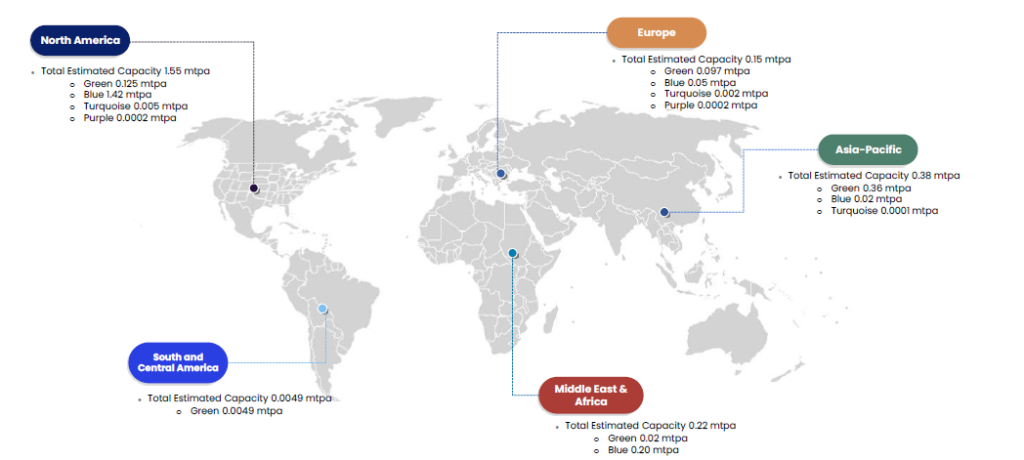
According to GlobalData, new North American low-carbon hydrogen projects were down more than 40% year-on-year in 2025, while additions in Europe remained steady. Approximately 16% of existing North American projects were cancelled or stalled, compared with 11% in Europe. While North America has thus far led the global hydrogen market, policy uncertainty may affect future growth.
Going big on green: policy drivers
Despite uncertainty in the North American market, globally, green hydrogen is expected to take the lead in hydrogen capacity by 2030. Brambilla links this growth to the declining cost of renewable electricity and policy frameworks increasingly aimed at expanding production.
Governments have put forward targets and incentives aimed specifically at renewable hydrogen. India's National Green Hydrogen Mission aims for 5mtpa of green hydrogen production by 2030, while Australia has introduced a production tax incentive for renewable hydrogen.
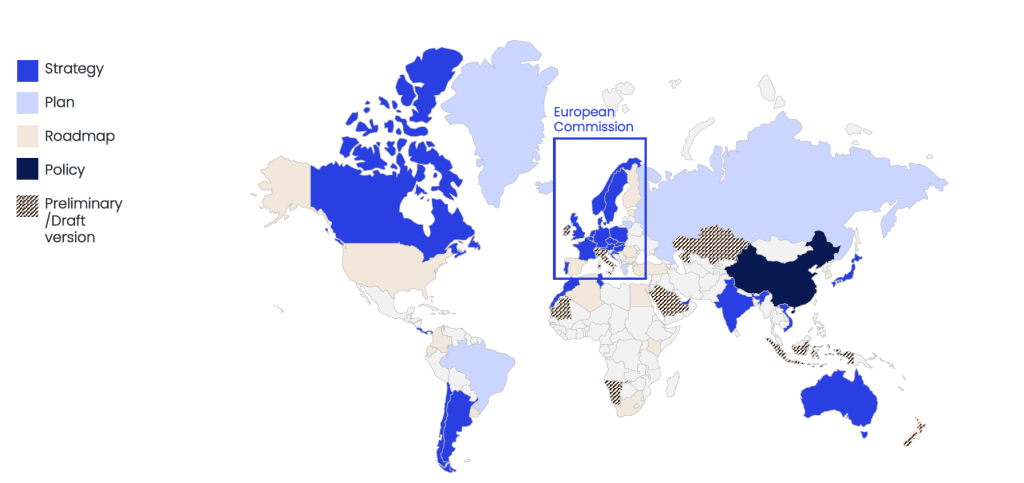
Europe’s policy frameworks are also serving as strong market drivers for green hydrogen production. The EU's revised Renewable Energy Directive requires at least 42% of hydrogen used in industry to come from renewable fuels of non-biological origin by 2030, increasing to 60% by 2035. The European Hydrogen Bank also pays a fixed premium on certified renewable output, and its third auction in May 2026 awarded more than €1 bn across nine projects representing around 1.1GW of electrolyser capacity.
According to GlobalData, Europe is expected to reach 22.95mtpa of low-carbon hydrogen by 2030, comprising 82% green hydrogen. Spain and Germany are expected to spearhead this growth: Spain is projected to become the second-largest hydrogen market globally, with around 5.4mtpa of upcoming capacity across 204 projects by 2030, while Germany has 3.7mtpa in its pipeline and is actively building a hydrogen core network to connect production, imports and storage with major industrial consumers.
The 2030 leaderboard
The ten countries with the largest low-carbon hydrogen capacity by 2030 are not the top ten countries today. Six countries set to enter the 2030 leaderboard currently have little or no current operational capacity.
Capacity of active projects (ktpa)
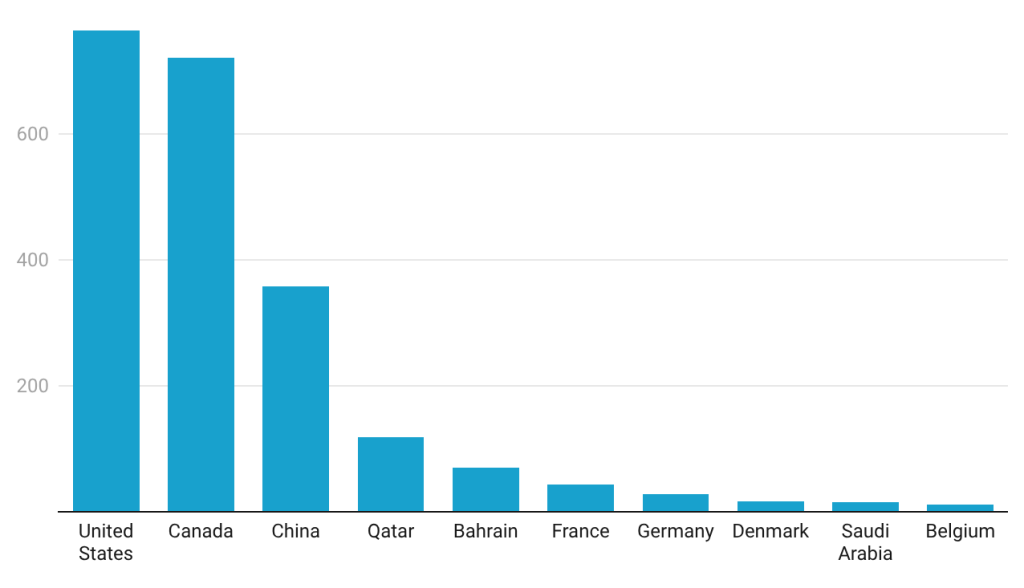
"Four of these six countries – Australia, Egypt, Morocco, and India – together account for roughly a quarter of potential 2030 capacity, compared with just 12ktpa currently in operation,” explains Brambilla.
Capacity includes active, announced and planned projects due to start by 2030 (ktpa)
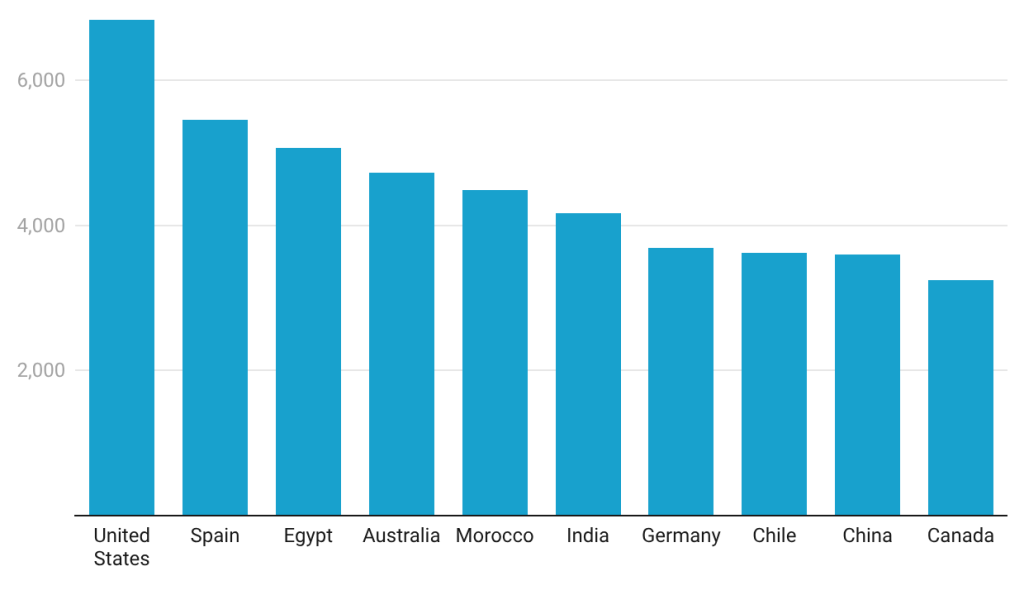
The forecasted 2030 capacities of the six countries are almost entirely green. “The growth of these markets is largely driven by favourable renewable energy resources, national hydrogen strategies and ambitions to establish a position in the emerging international hydrogen market,” says Brambilla.
Egypt and Morocco are betting on exports to Europe, drawing on their geographic proximity and growing demand for renewable hydrogen derivatives. They lead the Middle East and Africa (MEA) region, which has the second-largest regional pipeline to 2030 after Europe, expected to reach around 5.1mtpa and 4.5mtpa, respectively.
The MEA region's capacity today is almost entirely comprised of blue hydrogen, benefiting from hydrocarbon production in the Gulf, but GlobalData forecasts 98% of capacity to be green by 2030. Major projects include ACME Group's Ain Sokhna Hydrogen Project in Egypt, targeting 2.1mtpa of green hydrogen, and Mohring Energie’s NexTerra Project in Morocco, aiming for 1.4mtpa.
Morocco has allocated land to hydrogen project developers through a state-led process, selecting five investor groups to negotiate six projects worth around $32bn. But some of the land lies in Western Sahara, a disputed territory, and the EU’s top court in 2024 ruled that trade agreements with Morocco could not cover the territory without the consent of its people—a ruling Brambilla says could complicate its plans to export to Europe.
India's existing refining and fertiliser industries could provide a more immediate source of domestic demand, Brambilla explains. The Solar Energy Corporation of India held auctions in 2025 for around 724ktpa of green ammonia for fertiliser plants. Adani’s 2.5mtpa Khavda project, the country’s largest, remains at the feasibility stage.
Chile is expected to have 3.6mtpa of low-carbon hydrogen capacity by 2030, and such as India, Chile’s market is driven by domestic demand, mainly from transportation projects involving mining locomotives, heavy-duty trucking and shipping fuels.
Australia’s hydrogen market plans to take advantage of the country’s substantial solar and wind resources as well as established energy export infrastructure. However, Brambilla notes that nearly 40% of the country's planned projects have been cancelled or stalled, including the Central Queensland Hydrogen Project and Fortescue's Gladstone PEM50 project in 2025. This year, the Australian Renewable Energy Hub was also scaled back from 26GW to 15GW, completely overhauling its hydrogen strategy in the process.
Can the 2030 hydrogen pipeline be realised?
Announcements have run ahead of delivery. In the past year, ExxonMobil, Air Products and Fortescue have paused or cancelled projects, and others have been scaled back. Even so, the low-carbon hydrogen market could expand considerably towards 2030, according to Brambilla, with pace depending on how much of the announced pipeline becomes operating capacity.
GlobalData’s database indicates a potential 75mtpa of capacity by 2030 based on current project announcements. Today, approximately 4mtpa of planned capacity is under construction or being commissioned, and more than half of the total pipeline remains at feasibility stage.
“Announced capacity is also becoming a less reliable indicator of future deployment, as the sector's focus shifts towards obtaining financing, reaching final investment decisions and securing long-term demand," Brambilla says.
Demand is the main constraint. Only around 10% of planned global hydrogen capacity has an identified offtaker or end user, and fewer with binding contracts.
The problem is most acute for export projects, looking to overseas demand. Around 90% of Egypt’s expected 2030 capacity and half of Morocco’s remain at feasibility, and nearly 40% of Australia’s tracked projects have been cancelled. A similar trend is seen in North American projects targeting export markets.
Cost and infrastructure constraints compound the demand problem. Low-carbon hydrogen remains more expensive to develop than conventional hydrogen, and the infrastructure required to transport and store it, or to store CO₂ from blue hydrogen production, is unevenly developed, Brambilla explains. Norway's Northern Lights project, for instance, began operations in 2025 and provides industrial customers across Europe with access to permanent storage; however, projects without comparable access face delays.
The infrastructure hurdle is even greater for green hydrogen. Notably, close to 60% of planned green hydrogen capacity by 2030 is still at the feasibility stage, compared with a quarter for blue. Therefore, Brambilla comments: “While green hydrogen is likely to account for an increasing share of future capacity, blue hydrogen could retain an important role in markets with established natural gas resources and access to CO₂ storage infrastructure, particularly where projects can serve existing industrial demand.
"Ultimately, the ability to secure long-term offtake and coordinate infrastructure development is likely to be more important in determining which markets achieve their 2030 ambitions than renewable resource availability alone."